
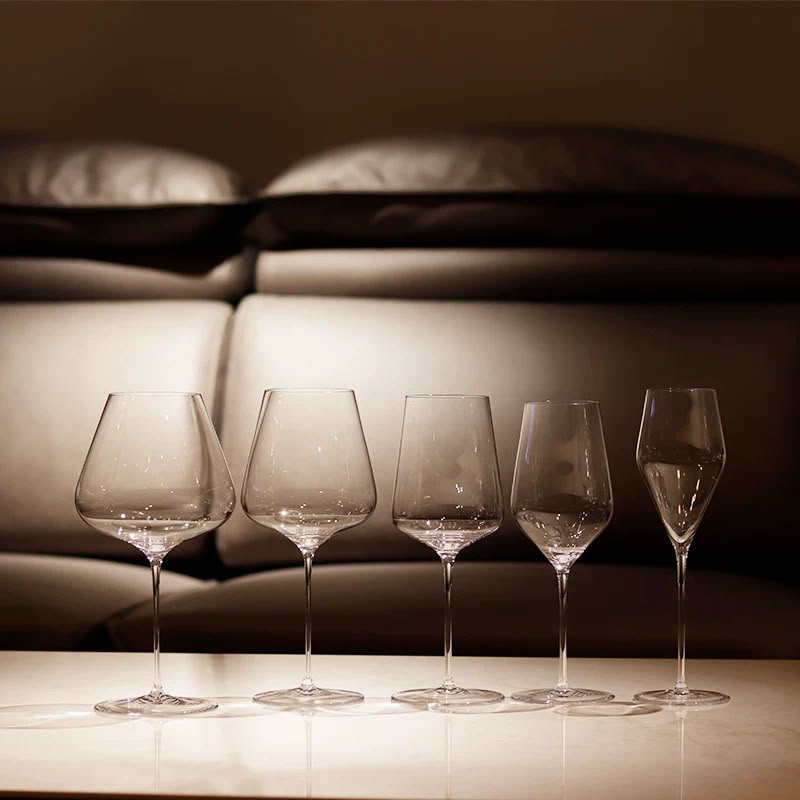
Why the flute became the symbol
The flute is instantly legible. Its tall, narrow silhouette signals celebration before the bottle opens, and the rising line of bubbles becomes part of the display. It is easy to arrange on a tray and creates an elegant rhythm for a toast. For receptions, large gatherings, and a brief celebratory pour, those qualities matter.
Its strength is also its limitation. A very narrow bowl leaves less room to smell the wine, and a small opening can make layered aromas harder to explore. If the sparkling wine is being served as a beverage of ceremony, that may be an acceptable trade. If it is being served as a serious part of the meal, you may want more space.
What the tulip changes
A tulip-shaped sparkling glass widens through the lower bowl before tapering toward the rim. The broader center creates room above the pour, while the taper keeps the silhouette focused. You can observe the bubbles and still bring more of the wine’s aroma into the experience.
The Sparkling Luxe follows this modern approach. Its volume is more generous than a traditional narrow flute, making it useful for Champagne, Cava, Franciacorta, and other sparkling wines that deserve attention beyond the first toast.
Think about the wine
For a simple, youthful sparkling wine served very cold at arrival, the flute can keep the presentation crisp and familiar. For vintage Champagne, traditional-method wine with extended aging, or a sparkling wine served with food, a tulip gives more room to notice bread, fruit, floral, mineral, or savory detail.
A broad white-wine glass can also be beautiful for complex sparkling wine. The bubbles may appear less visually concentrated, but the wine can become more expressive. This is a choice, not an error. Match the glass to the role the wine plays: punctuation, aperitif, comparison, or course.
Think about the occasion
At a standing reception, a narrow glass may be easier to carry through a room. At a seated dinner, the tulip’s bowl is comfortable for smelling and pairing with food. For a midnight toast, visual ceremony may be the entire point. For a quiet bottle shared by two people, aromatic range may matter more.
Do not overfill either shape. A modest pour leaves room above the wine and helps maintain temperature. Pour in stages if the foam rises quickly, allowing it to settle without filling to the rim. Hold by the stem to reduce warming and keep the bowl clear.
The modern host’s answer
If you own one sparkling-wine shape, choose a tulip. It moves easily from toast to table and handles a wider range of styles. Keep classic flutes if you love their ceremony or host large standing celebrations. The two shapes are not opponents; they serve different scenes.
Explore Persephaure’s Champagne glasses if you want a purpose-shaped sparkling silhouette that still belongs beside the rest of a modern wine table. The goal is not to retire ritual. It is to give the wine enough room to be part of it.