
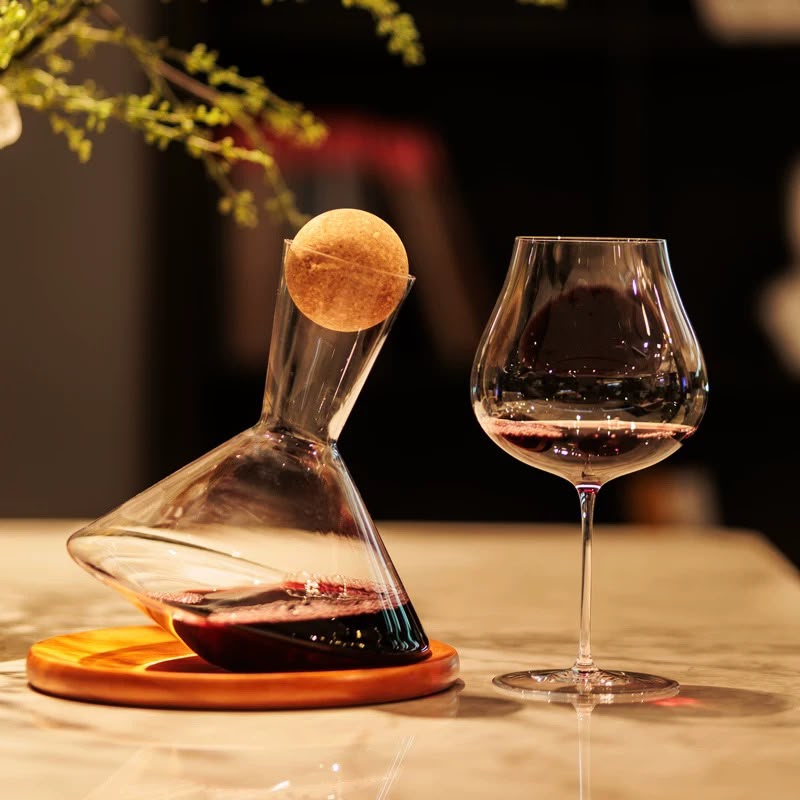
Set the table for movement
A dining table is not a still life. Hands reach, plates arrive, wine is poured, and conversation crosses the center. Begin by protecting those movements. Give every guest a clear path to water, wine, flatware, and napkin. Leave enough negative space that a server or host can place a dish without asking the table to rearrange itself.
Modern elegance is often a matter of editing. One well-scaled floral gesture is stronger than several small decorations. One beautiful wine glass, correctly placed, is stronger than three crowded stems waiting for hypothetical pours. Start with the service plan and let the composition emerge from it.
Choose one anchor
The anchor may be the glassware, a ceramic serving piece, a linen color, or the food itself. If the wine glasses have expressive silhouettes, keep the rest of the setting quiet: low florals, restrained candles, flatware with clean lines, and plates that give the dish visual room.
If the menu is highly colorful, clear stemware becomes a frame rather than a competing object. If the room is dark and intimate, the thin rim and long stem can catch just enough light to establish rhythm. The table should have a hierarchy, not a collection of unrelated statements.
Place glassware by use
Position the primary wine glass near the upper-right edge of the place setting, within easy reach but away from the plate’s working space. Place water where it cannot be confused with wine service. If a second wine glass is necessary, arrange it according to the order of use and keep enough distance that broad bowls do not touch.
The complete Luxe Series was designed so different bowls can share one table without visual noise. A broad Pinot glass and a slender Sparkling glass remain related through stem, base, clarity, and proportion. That coherence allows the wine program to change while the room still feels composed.
Use material contrast carefully
Clear, fine glassware is at its best against materials with quiet depth: washed linen, warm wood, honed stone, matte ceramic, or a dark reflective surface. You do not need all of them. Choose two or three material families and repeat them with restraint.
Color should behave the same way. Build a field of neutrals, then let wine, food, flowers, or one textile provide the accent. Bright overhead light can flatten crystal and food; lower, warmer sources create dimension. Keep flames and arrangements below sight lines so the table remains social.
Design the flow before the guests arrive
Decide where bottles will rest, where opened wine can breathe, and where used glassware will go. Chill whites and sparkling wines with enough time to settle, but avoid serving every wine at the coldest possible temperature. Place a clean service cloth and replacement glasses out of sight but within reach.
Then sit in one chair. Look across the table. Reach for the water. Imagine passing a serving dish. A table that works from the guest’s seat will look more effortless than one designed only from above. Hospitality becomes luxurious when the preparation disappears into ease.
- One primary glass per guest; add only what the wine sequence requires.
- Low centerpieces and uninterrupted sight lines.
- A protected landing place for bottles and used pieces.
- Replacement glassware staged before service begins.
- Lighting warm enough to create depth, bright enough to see the food.
Make it personal
A modern table should still reveal the host. Use the decanter inherited from family, the ceramic bowl found while traveling, or the menu you love to cook. Precision is valuable because it creates room for personality—not because every dinner should resemble a showroom.
If you are building a table for clients, a wedding, or a significant celebration, custom engraving can make the object part of the memory without covering the glass in decoration. Persephaure’s corporate gifting team can help shape an engraved presentation that remains useful long after the event.