
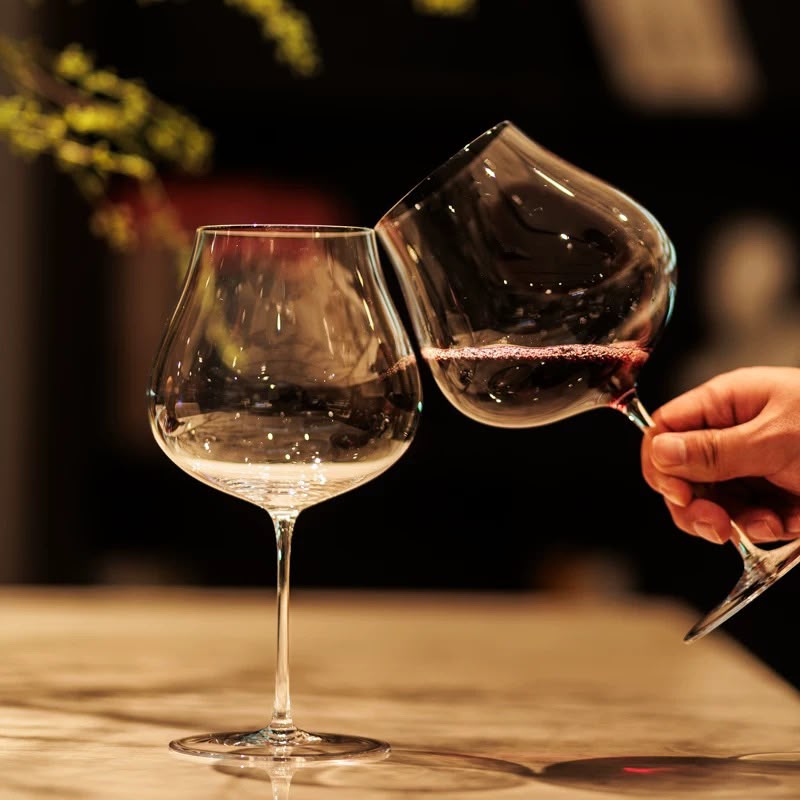
Let the evening decide
The right number of glasses is not determined by etiquette alone. It depends on the wines, the courses, the size of the table, and whether you want guests to compare pours. Begin with the sequence of the evening. Are you opening one bottle for the meal, moving from white to red, or presenting several wines as part of the experience?
Then count the physical moments: arrival, first course, main course, and perhaps a final toast. A single glass can move through the evening if it is rinsed or reset. Two wine glasses per guest allow a white-to-red transition or a side-by-side comparison. Three should be reserved for an evening in which the wines themselves are central.
Choose the primary shape
If one wine carries the meal, give it the purpose-shaped glass and let everything else adapt. A Pinot-driven menu deserves the broad Pinot silhouette. A Cabernet with roast or steak deserves a taller, more structured bowl. A seafood menu built around mineral white wines may call for the Sauvignon shape from the start.
When the menu includes several wines but the table is compact, use one versatile shape. The purpose of service is to support the meal, not to announce every category you own. The Find Your Glass guide can help select a primary silhouette based on the wine and the kind of gathering you are planning.
Count with a margin
For a seated dinner, plan at least one glass per guest for each shape you intend to use, then add a small service margin. Two extra glasses are often enough for a home gathering. They cover an accidental chip, a late addition, or the guest who would like to keep the previous pour for comparison.
Inspect and stage every glass before guests arrive. Look for water spots, fingerprints, or a base that does not sit cleanly. Place extras in an accessible but protected location. The host should not have to open a high cabinet or unpack a box while dinner is moving.
Give each stem room
A crowded table feels anxious. Position the primary wine glass above the knife line or slightly to the right, leaving a comfortable path for the water glass. If a second wine glass is needed, place it in the order of service without creating a rigid row that blocks conversation or serving dishes.
Remember the bowl, not just the base. Broad Pinot and Barolo shapes need lateral space. Tall Cabernet and sparkling glasses need vertical clearance beneath fixtures or florals. Set one complete place, sit down, and move your arms as a guest would. That simple rehearsal catches more problems than a diagram.
Manage transitions gracefully
If you are reusing a glass, ask guests before removing a remaining pour. A small neutral rinse can be offered, but it is rarely necessary to chase every trace of the previous wine in an informal dinner. If you are changing shapes, clear the first glass only after the next pour is ready. Empty spaces on the table should feel intentional rather than forgotten.
For larger dinners or hospitality service, a consistent stemware plan, replacement stock, and clear handling routine matter. Persephaure’s trade program is built for chefs, restaurants, hotels, designers, and event professionals who need the table to perform as beautifully as it photographs.
- Set and inspect glassware before final food preparation begins.
- Keep two clean replacements protected nearby.
- Pour below the widest part of the bowl.
- Clear by the stem or base and avoid carrying multiple fine stems in one hand.