
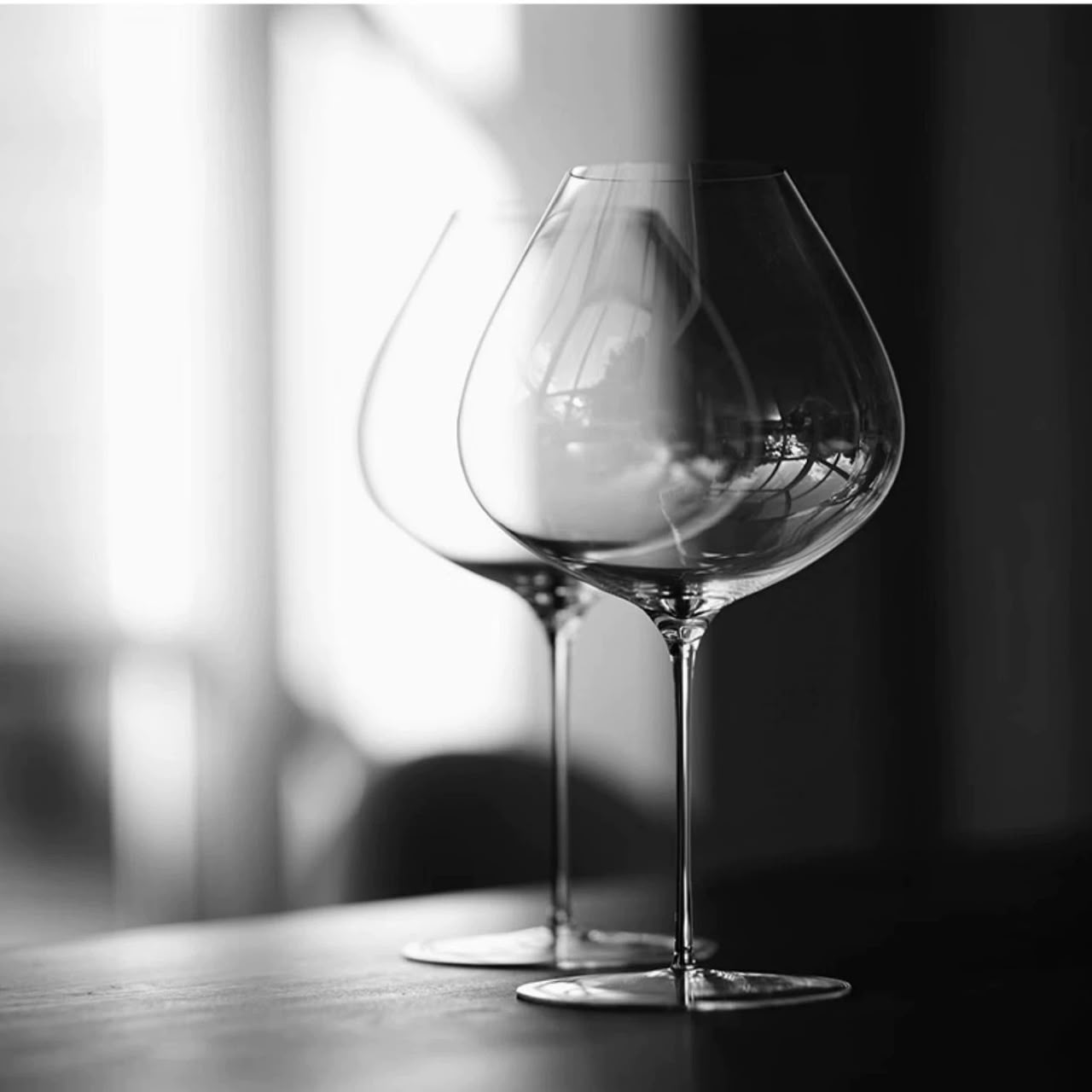
A chef’s way of looking at the glass
In a kitchen, the vessel is part of the dish. A broad plate gives aroma and color room to spread; a deep bowl gathers heat and scent. Wine glassware works in a similarly practical way. It does not rewrite the wine, but it can change the path by which you notice it—how much aromatic surface is exposed, where the fragrance gathers, and how the first sip arrives.
That is why I begin with proportion rather than rules. A glass should give the wine enough room to move while keeping the pour below the widest part of the bowl. It should feel balanced in the hand, and the rim should not interrupt the moment of drinking. Those are useful design decisions whether the bottle is a celebrated Burgundy or the weeknight red you simply enjoy.
The three parts you can actually observe
Start with bowl volume. A larger bowl generally creates more exposed wine surface at a normal pour and more air above the liquid. That can make it easier to notice layered aromas, especially in wines that open gradually. A smaller bowl tends to feel more immediate and focused, which can suit bright whites, delicate pours, or occasions when you want the wine to stay cooler.
Next, notice the opening. A wider rim allows aroma to disperse more freely and can make the sip feel broad. A narrower opening gathers the air above the wine into a smaller space and can make a fragrant wine feel more directed. Finally, look at the transition from bowl to rim. A gentle taper gives the wine space to open while still collecting what rises from the surface.
- Bowl: the working space for the wine and the air above it.
- Taper: the transition that helps hold or release aroma.
- Rim: the final point of contact and the direction of the sip.
- Pour line: the overlooked variable that determines how much room the glass can use.
Why the first sip can feel different
Before wine reaches the palate, you have already taken in the shape of the bowl, the color of the wine, and the aroma above it. A glass with a generous aromatic chamber may encourage you to slow down and notice more. A tighter silhouette may make the impression feel concise. The rim also changes the angle at which you naturally tilt the glass, which can subtly alter the physical experience of the sip.
I use the word can deliberately. Temperature, serving size, the wine’s age, the room, and the drinker all matter. Glassware is one part of service, not a promise of a single result. The goal is not to declare one sensation correct. It is to choose a shape that makes the wine easier to understand and the table more pleasurable to use.
The five-minute comparison
Pour the same wine into two clean glasses with visibly different bowls. Keep the amount and temperature as consistent as you reasonably can. Smell each without swirling, then swirl both gently and smell again. Take a small sip from one, pause, and repeat with the other. Notice which aromas are easiest to name, whether the wine feels broad or focused, and which rim feels most natural.
Try this with Pinot Noir in the broad Pinot Luxe and the taller Cabernet Luxe. The point is not to prove that one glass wins. It is to learn what each proportion emphasizes for you. Once you recognize the difference, choosing glassware becomes less about memorizing a chart and more about deciding how you want the wine to show up at dinner.
A useful collection, not a cabinet of rules
Most hosts do not need a different glass for every grape. Begin with the wine you pour most often, then add contrast. A broad aromatic red glass and a more focused white or sparkling shape cover a remarkable amount of ground. From there, a purpose-shaped collection becomes valuable when you enjoy comparing wines or want the service to be part of the occasion.
If you would like a considered starting point, use the Find Your Glass guide. It translates wine style, occasion, and the kind of collection you want into a recommendation, while leaving room for personal preference. The right glass is the one that brings clarity to the wine and calm to the host.