
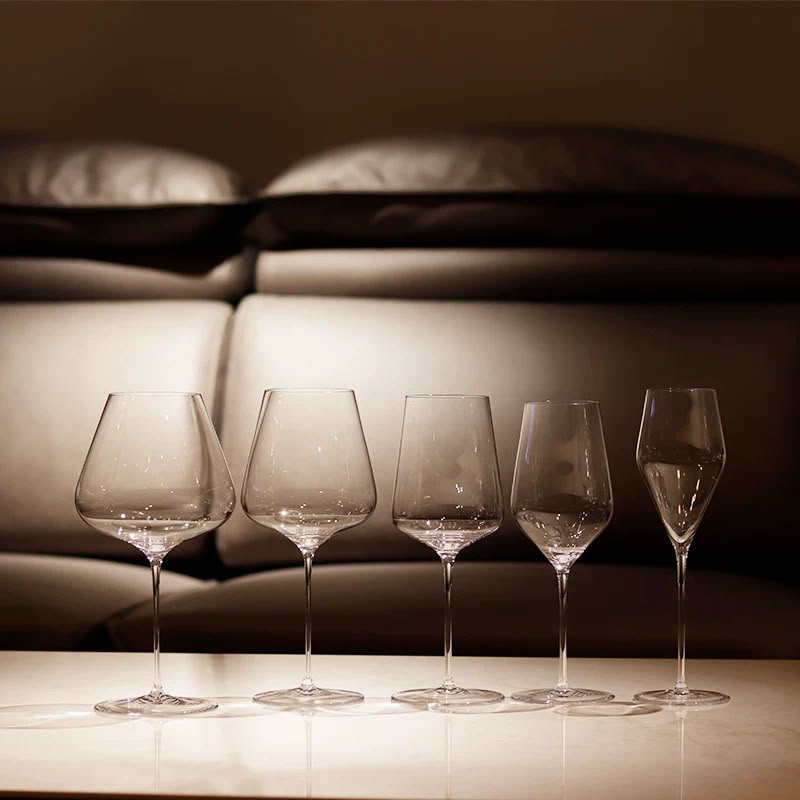
Two red-wine shapes with different intentions
Place a Burgundy-inspired Pinot glass beside a Bordeaux-inspired Cabernet glass and the distinction is immediate. The Pinot silhouette sits broader through the lower bowl and curves inward. The Cabernet silhouette rises taller, with volume carried vertically and a more measured taper. Both give red wine room. They simply organize that room differently.
At the table, that geometry affects more than appearance. It changes the exposed surface at a typical pour, the chamber of air above the wine, and the angle at which you bring the rim to your lips. Neither shape is universally superior. Each is a tool for a different style of expression.
When I reach for the Pinot shape
For Pinot Noir, Gamay, and red Burgundy, I prefer a broad bowl with a confident taper. These wines can offer fine, shifting aromatics rather than sheer weight. The open lower bowl gives the pour room to move, while the narrowing upper bowl helps keep the experience gathered. It is also a beautiful shape for mature wines, where small details are often the point.
The Pinot Luxe is not limited to Pinot. I use it for fragrant medium-bodied reds, some mature Nebbiolo, fuller white Burgundy, and even sparkling wine when aroma matters more than formality. Its versatility comes from the balance between breadth and taper, not from trying to be neutral.
When I reach for the Cabernet shape
Cabernet Sauvignon, Merlot, and Bordeaux blends often arrive with structure, dark fruit, and savory detail. A tall, generous bowl gives the wine room without letting the service feel loose. The narrower visual profile also sits elegantly in a formal place setting, particularly when several glasses share the table.
The Cabernet Luxe works well for many full-bodied reds and can become the primary red-wine glass in a streamlined collection. It is especially useful for hosts who enjoy Cabernet-based wines, serve steak or slow-roasted dishes often, or prefer a glass that feels architectural rather than rounded.
The crossover question
Can Cabernet go into a Pinot glass? Absolutely. Can Pinot go into a Cabernet glass? Yes. The more useful question is what each shape asks you to notice. The broad Pinot bowl may make a Cabernet feel expansive and aromatic; the tall Cabernet bowl may make a Pinot feel more contained. Your preference may change with the bottle, the meal, or even the season.
For a dinner party, consistency matters more than orthodoxy. If everyone is drinking the same wine, use the same shape for every guest. If you are comparing two wines, using one common glass removes a variable. If the evening is about showing two distinct styles at their best, then pour them in their purpose-shaped glasses and let the contrast become part of the conversation.
How to choose your first red-wine glass
Look at your last six bottles, not your aspirational cellar. If Pinot Noir, Beaujolais, red Burgundy, or aromatic reds dominate, begin broad. If Cabernet, Merlot, Malbec, or structured blends dominate, begin tall. If your tastes are evenly split, choose the silhouette that feels best in your hand and add the second shape when you are ready to compare.
The full red wine glass collection extends beyond this pair, but Pinot and Cabernet make a useful foundation because their contrast is easy to see and easy to understand. Owning both is not about enforcing rules. It is about having two clear ways to present the wines you already love.